Cornea • Cataract • Refractive Surgery
Precision Eye Care,
Focused on You.
Detailed evaluation, clear explanation and evidence-based options — eye care planned around your vision, your lifestyle and your clinical suitability.
MBBS • MS (Ophthalmology) • FICO • Fellowship in Cornea & Anterior Segment
Medical Director & Consultant at Jain Eye Hospital & Laser Centre →


MBBS, MS (Ophthalmology)
Medical & postgraduate training
FICO
Fellow of the International Council of Ophthalmology
Fellowship — Cornea & Anterior Segment
Advanced subspecialty training
Medical Director & Consultant
Jain Eye Hospital & Laser Centre

Meet Your Eye Surgeon
Dr. Rajat Jain
Dr. Rajat Jain is an Ophthalmologist & Eye Surgeon with focused training in cornea, anterior segment, cataract and refractive surgery. His practice combines detailed evaluation, evidence-based decision-making and clear communication — so every plan is built around the individual patient, not the average one.
“The right treatment is the one that fits your eyes, your life and the evidence — explained honestly, decided together.”
What patients can expect:
- Careful, unhurried assessment of your specific eye condition
- Options explained in plain language — benefits and limitations
- Shared decision-making with no pressure toward surgery
- Structured follow-up through the hospital care team
Areas of Focus
Three Specialities, One Precision Approach
Every treatment journey begins with the same three questions: what does the eye show, what does the patient need, and what does the evidence support?

Cornea & Anterior Segment
The clear window of the eye — infections, scars, shape disorders and ocular-surface disease, evaluated layer by layer and treated conservatively first, surgically when right.
Explore →
Cataract Surgery
Modern small-incision surgery with personalised lens planning. Precise measurement, honest lens counselling and realistic expectations — no “best lens” selling.
Explore →
LASIK & Refractive Surgery
LASIK, SMILE, PRK and ICL compared neutrally — with the cornea’s long-term health placed before the convenience of losing glasses. Suitability always comes first.
Explore →
Cornea Centre
Protecting the Eye’s Clear Window
Blurred vision that glasses don’t fix, glare at night, a white spot on the eye, or a shape that keeps changing — these are corneal conversations. Dr. Jain’s fellowship training in Cornea & Anterior Segment focuses exactly here.
- Corneal infection & injury — same-day urgency when warning signs appear
- Keratoconus — progression monitoring and timely cross-linking
- Scars & opacities — from medical care to lamellar transplant planning
- Dry eye & ocular surface — the foundation beneath every surgical plan
Cataract Care
From Foggy to Clear — The Lens-Planning Journey
- Consultation & measurements
Vision testing, eye examination and biometry to calculate lens power precisely.
- Lens discussion
Monofocal, toric, multifocal or EDOF — honest pros and cons for your measurements and lifestyle.
- Surgery when indicated
Small-incision phacoemulsification, typically 10–20 minutes, usually anaesthesia by drops.
- Recovery & follow-up
Rapid visual improvement with structured drops and reviews; final glasses after stabilisation.

Vision Correction
LASIK, SMILE, PRK or ICL?
A neutral comparison — because the right question is not “which is best” but “which may be suitable for your eyes”.

LASIK
| How it works | Thin corneal flap lifted; excimer laser reshapes the bed; flap repositioned |
|---|---|
| Recovery | Fastest — useful vision within hours, most routine activity in 1–2 days |
| Considerations | Needs adequate corneal thickness; flap considerations for contact sports |
Suited to a wide range of myopia, hyperopia and astigmatism within measured limits. Suitability only after full evaluation.

SMILE
| How it works | Femtosecond laser creates a lenticule inside the cornea, removed via a 2–3 mm incision |
|---|---|
| Recovery | Rapid — most functional within 1–3 days |
| Considerations | Flap-free; mainly for myopia and astigmatism within its range |
A keyhole alternative for active lifestyles where corneal stability is prized.

PRK / TransPRK
| How it works | Surface epithelium removed; excimer laser reshapes directly — no flap, ever |
|---|---|
| Recovery | Slowest of the lasers — best vision develops over 2–4 weeks |
| Considerations | Ideal for thin corneas and flap-risk professions; conserves the most tissue |
The road is longer; the destination is comparable for suitable eyes.
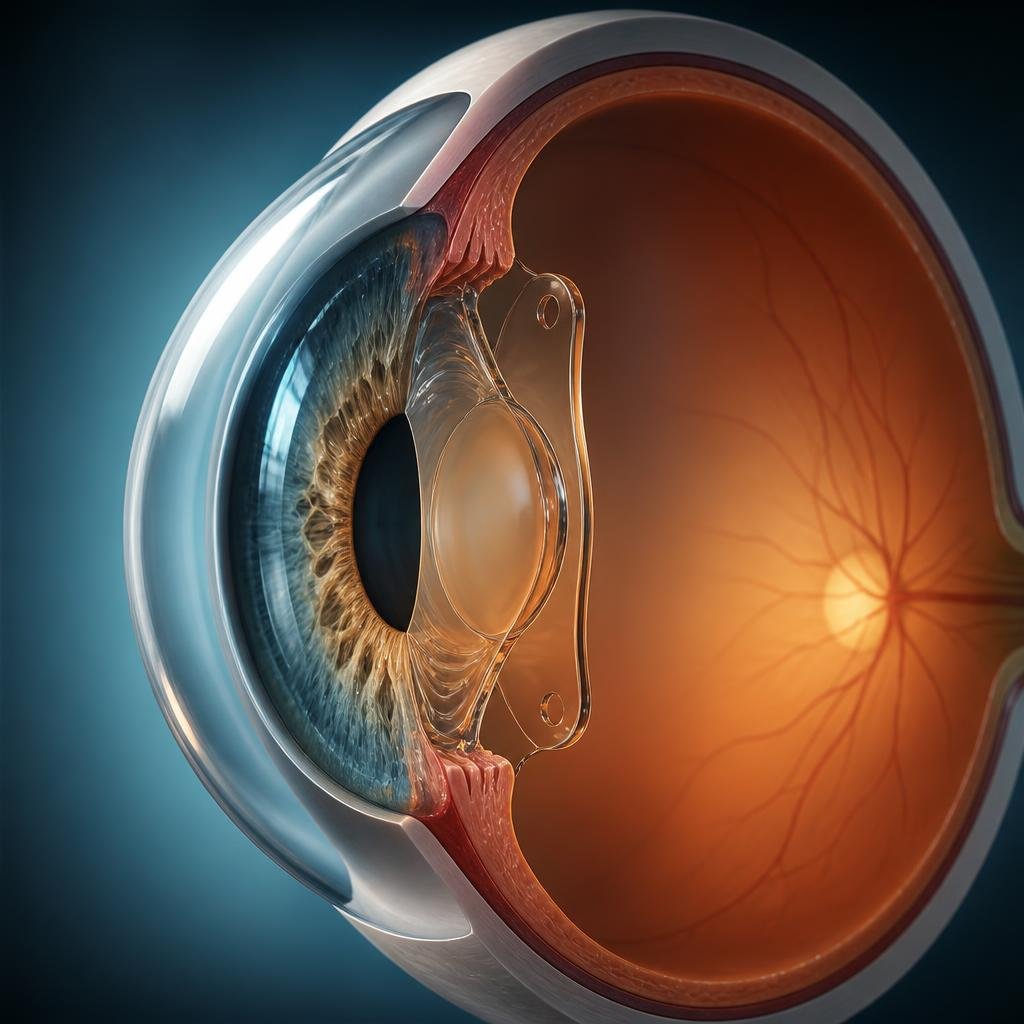
ICL (Implantable Lens)
| How it works | A biocompatible lens is placed inside the eye, behind the iris — cornea untouched |
|---|---|
| Recovery | Dramatic improvement by next morning for most patients |
| Considerations | For high powers or thin corneas; an internal procedure needing lifelong annual reviews |
The additive answer when corneal laser is not the safe one.
Your Journey
The Precision Care Pathway
Online or by phone — a request, not a confirmation
Symptoms, previous records, lifestyle and priorities
Measurements chosen for your clinical question
Benefits, limitations and alternatives — plainly
Only when the evidence and your consent align
Structured reviews through the hospital team
What to bring
- Current glasses and any contact-lens details
- Previous eye reports, scans and prescriptions
- Medication and allergy list; diabetes/medical history
- Previous surgery records, if any
- A companion if dilation may affect your travel
Good questions to ask
- What exactly is causing my symptoms?
- What are my non-surgical options?
- What are the realistic benefits and risks for me?
- What happens if I do nothing for now?
- What will follow-up look like?
The Hospital Behind the Care
Practising at Jain Eye Hospital & Laser Centre
Dr. Jain’s consultations, diagnostics and surgeries are coordinated through Jain Eye Hospital & Laser Centre, Adarsh Nagar, New Delhi — where his role as Medical Director & Consultant places him at the centre of patient care, team collaboration and clinical standards.
 Care in practice
Associated With
Jain Eye Hospital & Laser Centre
Appointments and procedures for Dr. Rajat Jain are arranged through the hospital’s central services.
Visit Hospital WebsiteAcademic Work
Training, Research, Awards & Publications
Listed with documentary verification — never inflated. Full details on the dedicated pages.
Undergraduate medical training
Postgraduate speciality training
Fellowship of the ICO
Advanced subspecialty fellowship
Awarded for MS Ophthalmology performance
Conference paper presentation award
Delhi Ophthalmological Society e-poster
Cornea & Ocular Surface
Research themes include corneal infection, ocular-surface disease and Descemet membrane complications
Cataract & Anterior Segment
Anterior-segment surgical outcomes and anterior-chamber studies
Refractive Surgery
Corneal shape, graft outcomes and refractive-surgery-related research
Every publication is verified against the original journal or PubMed before display — no garbled citations.
Patient Education
Learn Before You Decide

Cataract, keratoconus, LASIK & cornea — explained in plain language
Doctor-written guides that prepare you for consultation, never replace it.

Short expert videos on common eye questions
Recorded answers from Dr. Jain on the questions patients ask most.

Documented, consented patient experiences
Published only with written consent — and never presented as typical results.
Take the First Step
Book a Consultation with Dr. Rajat Jain
Jain Eye Hospital & Laser Centre
A-14, G. T. Karnal Road, Adarsh Nagar, Opp. Adarsh Nagar Metro Station, New Delhi – 110033, India
+0412 500 063
info@jaineyehospitals.com
A consultation request is confirmed only after the hospital team contacts you. Please avoid sharing sensitive medical details through online forms.
